

Pens vs Vials: What Actually Changes
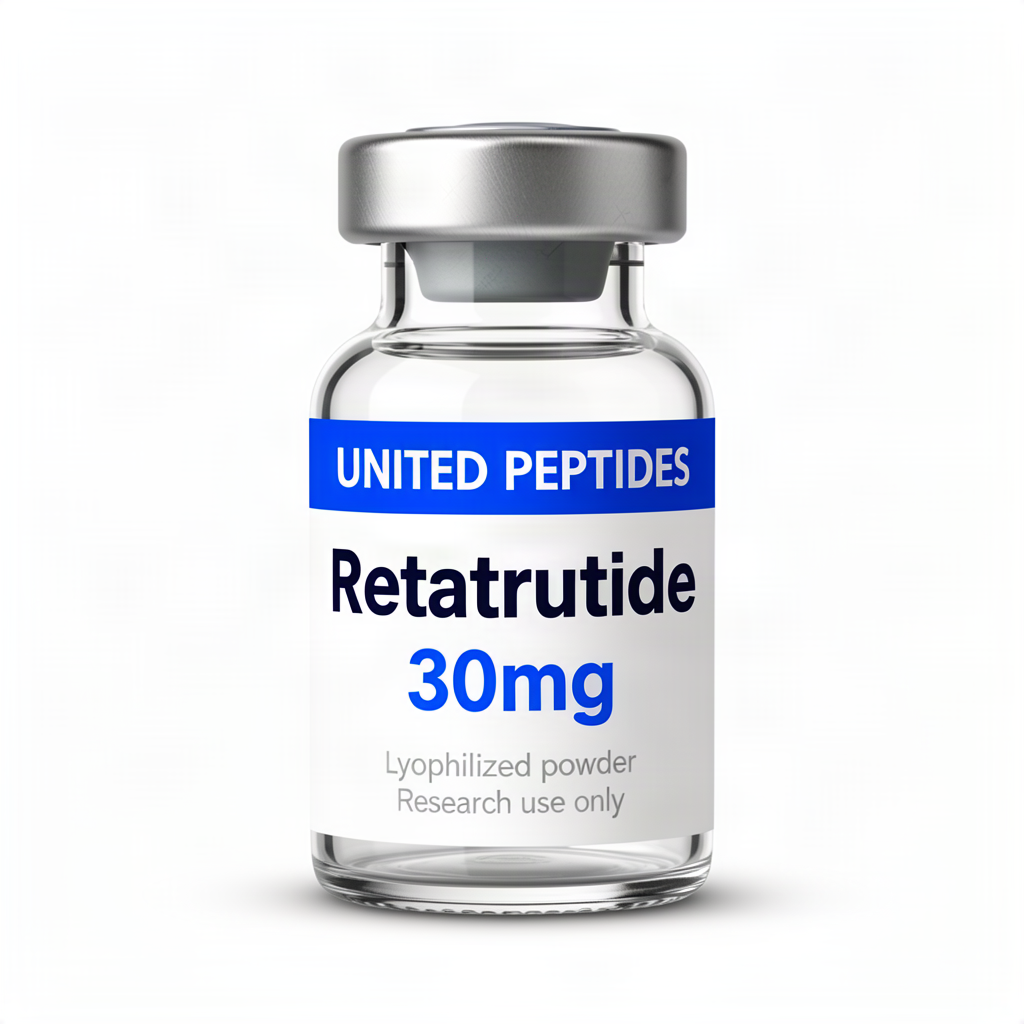
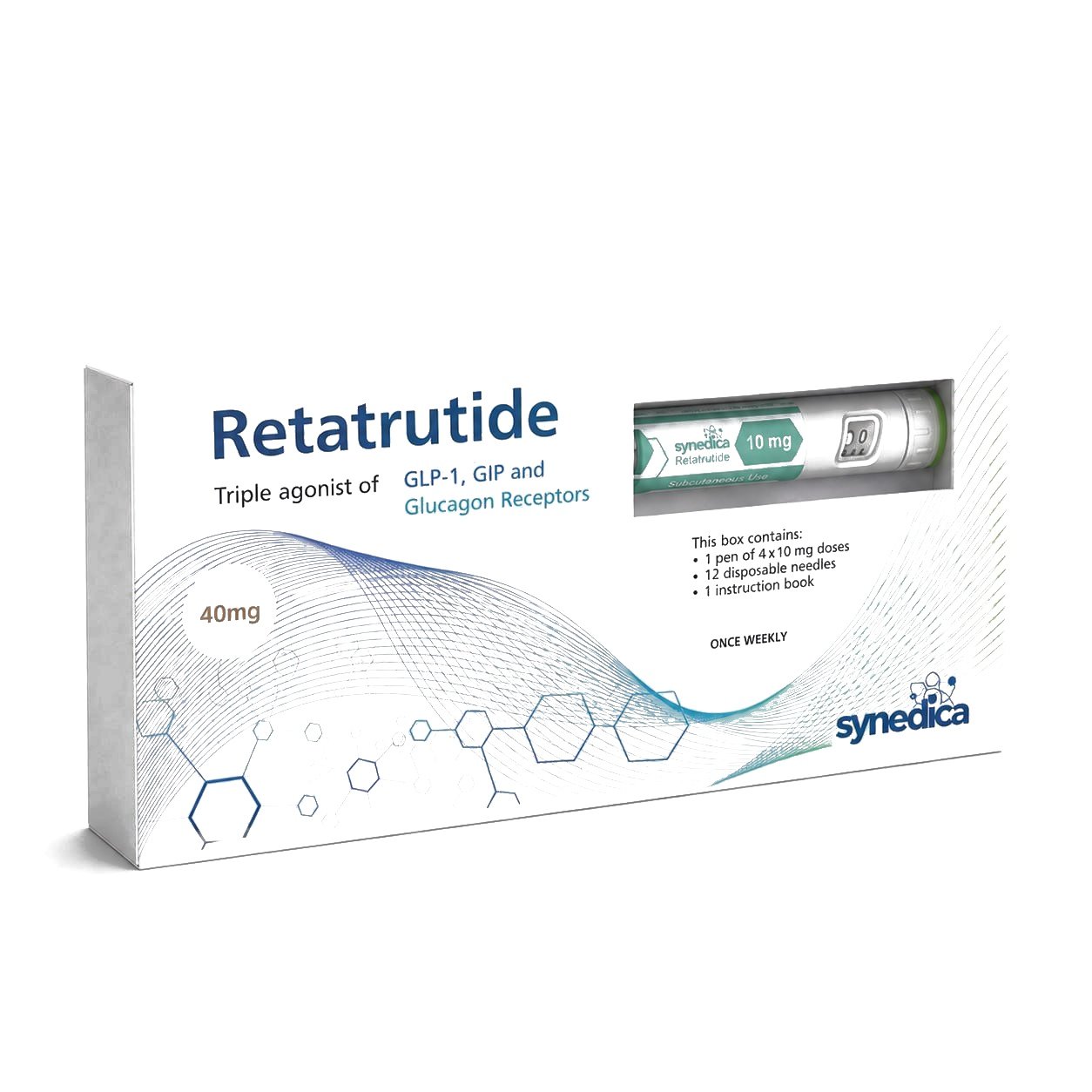
Retatrutide pens vs vials is not a question of quality. Research peptides are supplied in two physical formats, and the difference is more than packaging. A lyophilised vial contains freeze-dried powder that must be reconstituted with a diluent before use. A pre-filled pen arrives as a ready-to-use device with the material already prepared and sealed in a metered delivery system.
This guide sets out how the two formats differ in practice — preparation, handling, storage, accuracy and waste — so you can choose the right one for your work.
Format Comparison at a Glance
| Supplied form | Lyophilised (freeze-dried) powder | Pre-filled, ready-to-use device |
| Preparation required | Yes — reconstitute with diluent before use | None — ready on arrival |
| Handling risk | Higher: open handling, measuring, mixing | Lower: sealed, metered system |
| Dose accuracy | Depends on operator technique and equipment | Fixed by the device mechanism |
| Storage before use | Cold, dark, sealed; stable dry | Cold, dark, sealed; stable until expiry |
| Storage after opening | Reconstituted solution is time-limited | Device remains sealed between uses |
| Waste / leftovers | Leftover powder or solution after a run | None — the pen is used to completion |
| Consistency between batches | Operator-dependent | Device-controlled |
| Best suited to | Flexible protocols, variable volumes, dilution studies | Defined protocols, reproducible delivery, simplicity |
Reconstitution: The Practical Difference
The vial format exists because freeze-drying is the most stable way to store peptides long-term. The trade-off is that the material must be returned to solution before it can be used, and that step introduces variability.
Every reconstitution decision — diluent volume, mixing technique, whether to filter — changes the final concentration. Two researchers using the same vial can end up with solutions that differ by a meaningful margin. That variability is not a fault in the material; it is inherent to the open-handling step.
The pen format removes that step entirely. There is nothing to measure, mix or filter. The concentration is fixed at manufacture and does not change based on operator technique.
If your protocol depends on precisely controlled concentrations across many runs, the pen format removes a variable. If your protocol requires non-standard concentrations or dilution series, the vial format gives you the flexibility the pen cannot.
Accuracy and Reproducibility
Reproducibility is where the formats diverge most sharply.
- Vials: accuracy depends on the operator, the quality of the measuring equipment, and consistency of technique. Skilled operators achieve high accuracy; the requirement for skill is the point.
- Pens: accuracy is engineered into the device. The mechanism delivers a fixed increment regardless of who operates it, which makes results easier to reproduce across operators and locations.
For work where the delivery mechanism itself must not be a variable, a pen removes that concern. For work where the reconstitution step is part of the experiment, a vial is the correct choice.
Storage and Shelf Life
Both formats share the same basic storage rules: cold, dark, sealed, and away from temperature fluctuation. What differs is what happens once you start using the material.
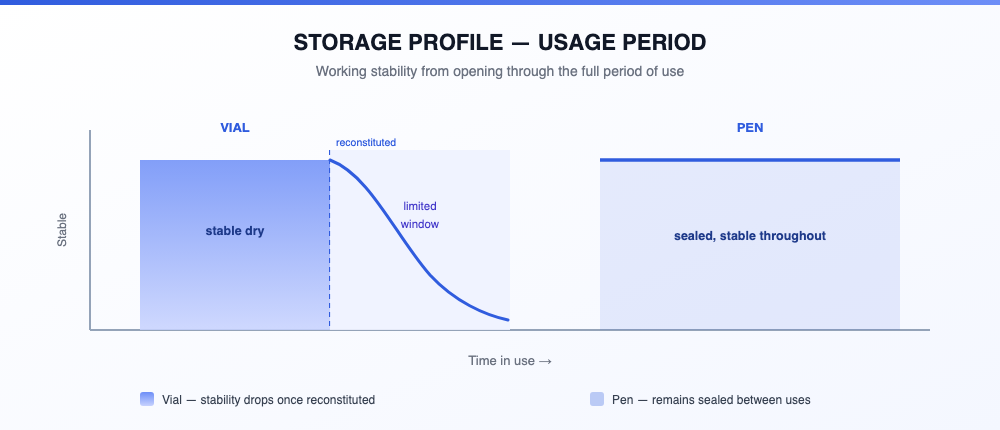
A lyophilised vial, left sealed and dry, is stable for an extended period. Once reconstituted, the solution has a limited working life and should not be refrozen repeatedly. That creates a practical pressure to plan usage around the reconstructed volume rather than around your actual requirement.
A pen stays sealed between uses. There is no reconstituted solution sitting in the fridge degrading while you work through it, and no decision about whether to freeze a partial remainder.
Waste and Cost Efficiency
Vials are typically sold in smaller increments and are cheaper at the unit level. That looks efficient until you account for what is lost in preparation.
Reconstitution creates unavoidable losses: material retained in the vial, in the filter, and in the delivery equipment. Those losses rise as the volumes get smaller. A protocol that nominally uses 10mg may consume meaningfully more once preparation losses are counted.
Pens have no preparation loss. The device delivers the full stated quantity, which means the cost per milligram actually used can be lower than a vial with a superficially lower unit price.
When comparing formats on cost, compare cost per milligram used, not cost per milligram purchased.
When to Choose Each Format
Choose a pen when:
- Your protocol uses a defined, repeatable quantity.
- You want reproducibility without depending on operator skill.
- You want no preparation step and minimal handling risk.
- You want no leftover solution degrading in storage.
- You are running the same procedure repeatedly.
Choose a vial when:
- You need non-standard concentrations or a dilution series.
- The reconstitution step is itself part of your method.
- You need to vary the delivered volume freely.
- You are working with material you must aliquot across multiple sub-experiments.
Why United Peptides Supplies Pens
United Peptides supplies Retatrutide 40mg and Retatrutide 20mg as pre-filled pens, together with Tirzepatide 60mg and Semaglutide 5mg. The pen format removes the reconstitution step and the variability it introduces, which is the right default for research where reproducibility of delivery matters.
Each batch is HPLC-verified to a ≥98% purity specification and ships with batch-specific documentation on request. Tiered discounts apply on larger quantities.
If you are weighing up strengths rather than formats, see our Retatrutide 20mg vs 40mg comparison. For background on the compound itself, start with the complete Retatrutide research guide.
Retatrutide Pens vs Vials: The Evidence on Preparation and Stability
The variability a reconstitution step introduces is documented in the analytical literature — this study on peptide purification and transferability covers how handling steps affect measured outcomes. For the compound itself, the phase 2 trial is Triple-Hormone-Receptor Agonist Retatrutide for Obesity, and glucagon-receptor energy expenditure work is published in Cell Metabolism.
Retatrutide Pens vs Vials: Frequently Asked Questions
What is the main difference between a pen and a vial?
A vial contains lyophilised powder that must be reconstituted before use. A pen arrives pre-filled and ready to use, with no preparation step.
Do pens need to be reconstituted?
No. Pens are supplied ready to use. There is no diluent, no mixing step and no reconstituted solution to store.
Is a vial more accurate than a pen?
Not inherently. Vial accuracy depends on operator technique and equipment. Pen accuracy is fixed by the device mechanism, which makes it easier to reproduce across operators.
Are vials cheaper than pens?
Vials usually have a lower unit price, but reconstitution introduces preparation losses. Compare cost per milligram actually used rather than purchased — see our Retatrutide 40mg listing for an example.
Can I store a pen the same way as a vial?
The basic rules are the same — cold, dark, sealed, stable temperature. The advantage of a pen is that it stays sealed between uses, so there is no reconstituted solution degrading in storage.
Moving Forward
Retatrutide pens vs vials comes down to whether reproducibility or flexibility matters more in your protocol.
Pens and vials are not competing products; they serve different research needs. Vials offer flexibility and lowest unit cost, at the price of a preparation step and its variability. Pens offer reproducibility and simplicity, at the price of fixed concentrations.
United Peptides supplies pens as standard because delivery consistency is the variable most researchers want removed. All products are supplied strictly for laboratory research use only (RUO). Not for human or veterinary use. Not for diagnostic or therapeutic purposes. You must be 18 or older, UK-based, and purchasing for scientific research.
Browse the full research peptides range, or compare our Semaglutide 5mg and Retatrutide 40mg, Retatrutide 20mg and Tirzepatide 60mg listings.