

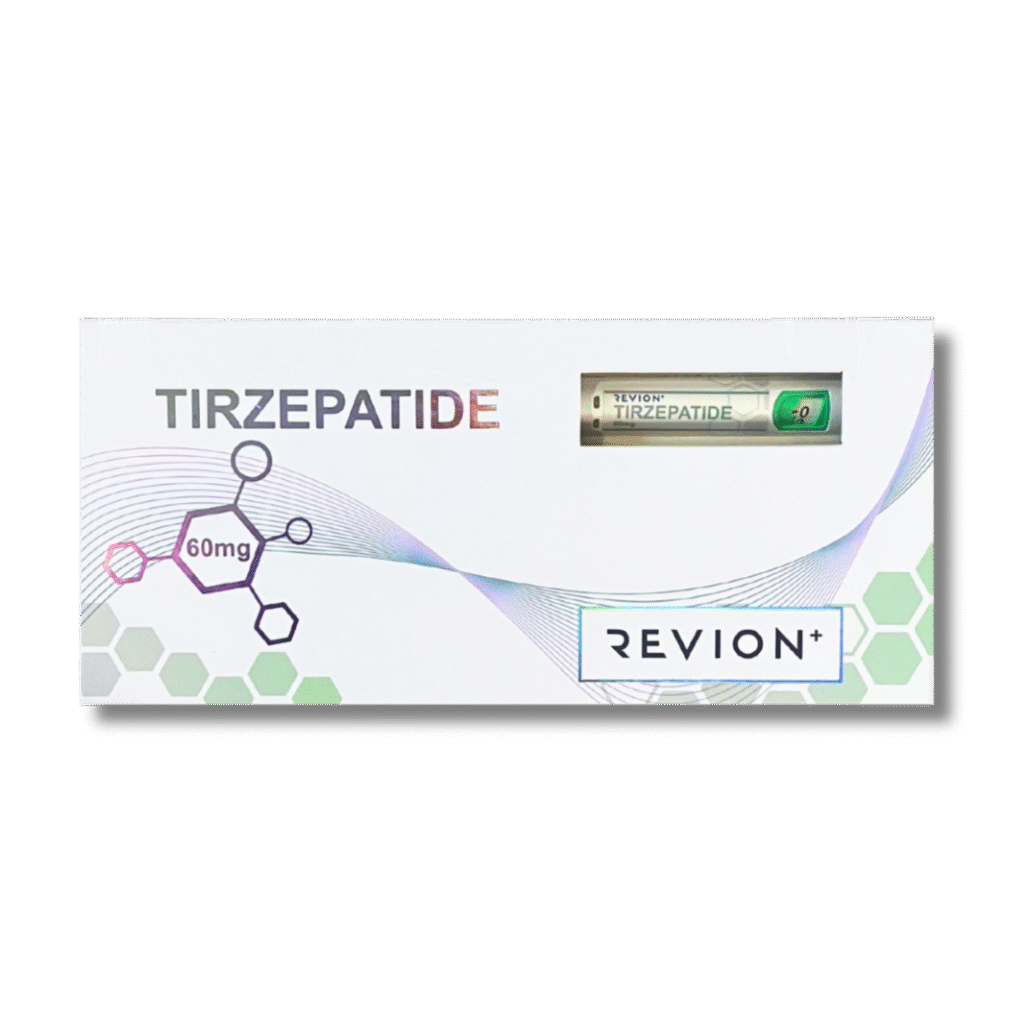
A Tirzepatide 60mg research unit is a sealed, pre-filled pen device rather than a loose solid, and that single fact changes almost everything about how the material is stored, handled and planned into a study. This guide covers what the strength figure means, what format the unit arrives in, and how to handle it so the batch documentation still describes the material in use months later.
It is written for laboratories that have already decided to work with the compound and now need the practical detail. For the pharmacology, the Tirzepatide Research Guide is the right starting point.
What “60mg” Describes
The strength figure describes the quantity of Tirzepatide in the sealed unit – not a dosing instruction, and not a working concentration. In a research context the figure exists so that the material in a study can be referenced precisely – batch identity, strength and lot number together define what was actually used.
That reference chain matters more than it might appear
When a study spans multiple lots, the strength and lot number are the two variables a reader needs in order to interpret any deviation between runs. Recording one without the other leaves the observation unattributable.
| Material designation | Tirzepatide research unit, 60mg |
| Format supplied | Sealed pre-filled pen device in a plain presentation box |
| Preparation required | None – no weighing, no solvent work, no in-house characterisation step |
| Purity standard | HPLC-verified at 99% or better, peptide content |
| Documentation | Lot-specific certificate of analysis with mass spectrometry identity confirmation |
| Intended use | Laboratory research only; not for human or veterinary use |
Why Format Changes the Handling Protocol
Bulk lyophilised peptide and a sealed pen device are not the same material in different packaging. They impose different handling burdens, and the difference is large enough to affect study design.
| Preparation burden | Sealed pen: none | Bulk solid: weighing, solvent work, characterisation |
| Humidity exposure risk | Sealed pen: none while sealed | Bulk solid: hygroscopic, every opening is a degradation opportunity |
| Operator variability | Sealed pen: fixed, defined state per unit | Bulk solid: varies with weighing accuracy and technique |
| Storage as supplied | Cold, dark, dry; stable as a sealed unit | Cold, desiccated, light-protected; more sensitive to handling |
| Batch traceability | Carried on the sealed unit and its documentation | Carried on the container; easier to divorce from the material |
For a multi-arm comparative study, the pen format removes a class of preparation variables entirely. Where a result differs between arms, the difference cannot be attributed to inconsistent weighing or uneven solvent handling, because neither happened.
Molecular Background in Brief
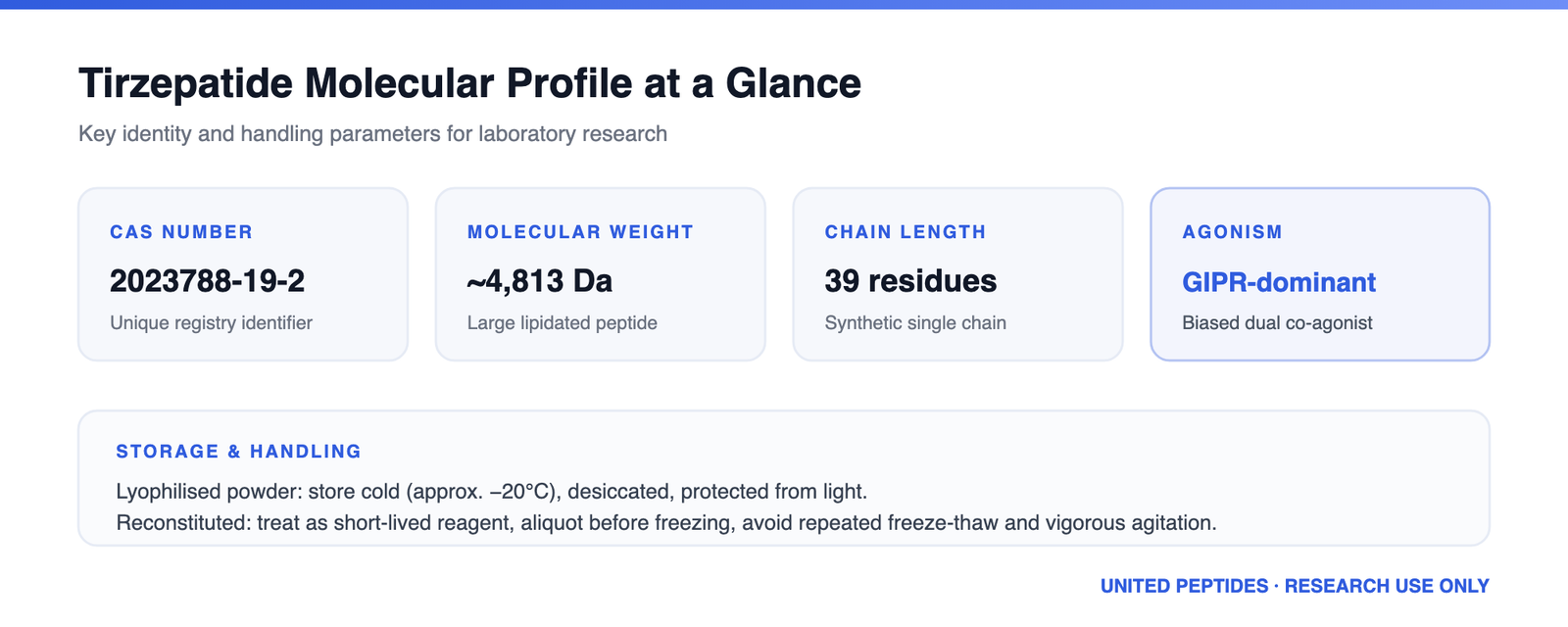
Tirzepatide is a 39-amino-acid synthetic peptide engineered to activate two Class B G-protein-coupled receptors from one backbone: the glucose-dependent insulinotropic polypeptide receptor (GIPR) and the glucagon-like peptide-1 receptor (GLP-1R). It is frequently described as a twincretin.
The important structural detail is that the two arms are not equal
The molecule binds GIPR with roughly native-GIP affinity while binding GLP-1R at approximately five-fold weaker affinity than native GLP-1. It is GIPR-dominant, imbalanced and biased – a deliberate design property, not a limitation. The C20 fatty diacid moiety attached through a linker extends the molecule’s behaviour in biological systems and is the modification most easily lost in a poorly controlled synthesis.
That last point is the practical reason mass spectrometry confirmation matters as much as an HPLC purity figure. Without it, a de-lipidated batch is indistinguishable from intact material on the certificate. Every batch released is backed by an independent laboratory report, and the full documents are published against their lot numbers in our Certificate of Analysis gallery.
Storage and Stability as Supplied
Sealed units should be stored refrigerated at 2-8 degrees C, protected from light, and not frozen. The highest-value discipline is simply consistency: a stable storage temperature and no unnecessary cycling. Follow the conditions printed on the product label and stated in the batch documentation.
Two habits damage material more than any single mistake
The first is repeated temperature cycling – moving units in and out of cold storage for short checks that could be done from documentation instead. The second is separating documentation from material. A certificate filed in a lab notebook that does not travel with the box is a traceability failure waiting to be discovered at write-up.
Log the date material entered storage. Log the date it was opened. Where a study spans lots, keep the documentation for each lot with its units rather than consolidating certificates into a single file.
Planning a Study Around the Unit
Because sealed units arrive in a defined state, study planning shifts from preparation logistics to allocation and record-keeping.
Allocate units to arms before opening anything. Decide which unit serves which arm and record the lot number against the arm. This is trivial when planned in advance and painful to reconstruct afterwards.
Match unit quantities to the number of arms and timepoints. Over-ordering to capture tiered pricing only pays if the material will genuinely be used within its practical storage window.
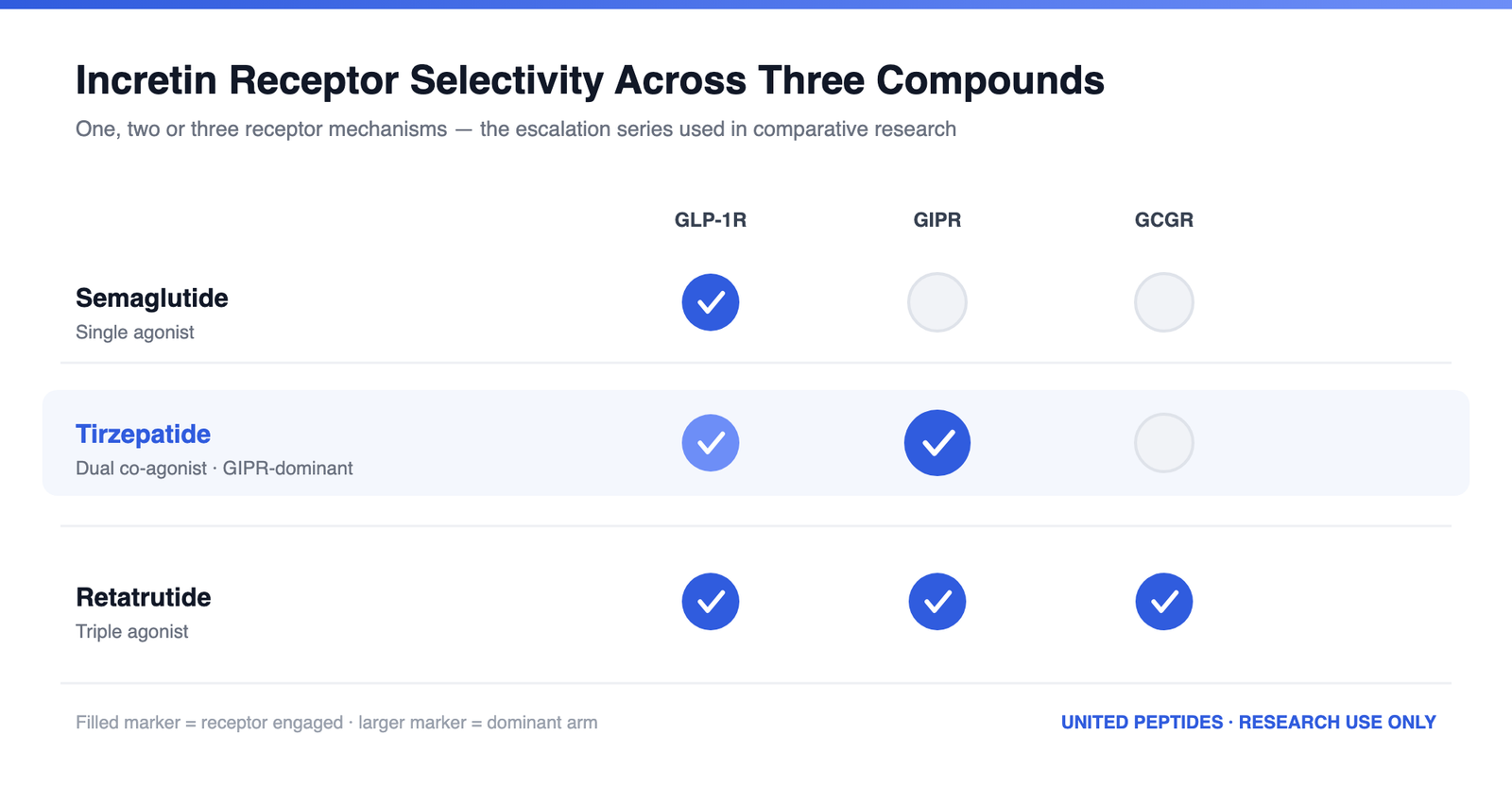
Hold format constant across all arms. Mixing a sealed unit in one arm with a bulk solid in another introduces a format variable that no statistical treatment removes. A study comparing a GIPR-dominant dual agonist against a selective GLP-1 agonist should source both in the same format.
Record batch identity as a variable. Where a study spans multiple lots, report it. An inter-batch difference misread as a biological effect is a real and avoidable failure mode.
Sampling and Verification Before Use
The analytical work that verifies material should happen before the unit enters a protocol, not after a result looks wrong.
Confirm that the certificate on file names the lot in your hand. Confirm that the reported purity is stated as peptide content rather than a combined area percentage. Confirm that mass spectrometry data confirms the expected molecular mass with the lipid moiety intact.
Where a protocol requires the compound to be characterised in-house as well as by the supplier – common in published work – run that characterisation on the same unit used in the experiment rather than a separate reference unit from the same lot. Intra-lot variation is small, but the point of the exercise is eliminating assumptions, not minimising them.
Published methodology for peptide purity analysis is worth reading alongside any supplier documentation. The peptide purification and analytical transferability review in the Journal of Peptide Science covers how analytical figures move between methods and why method disclosure matters.
Common Handling Mistakes
Treating the strength figure as a working concentration. It is not. It describes the material in the unit so the unit can be referenced precisely.
Storing documentation centrally and material locally. Splitting them is the most common traceability failure in multi-lot studies.
Assuming a pen unit means an easier protocol with less rigour. The format removes preparation variables; it does not reduce the requirement to record what was used, when, and from which lot.
Buying the largest available quantity for a study with two arms. Excess sealed units still need correct storage and still carry a practical shelf-life window.
Where United Peptides Fits
United Peptides supplies Tirzepatide 60mg as sealed pre-filled research pen units with batch documentation, HPLC-verified, dispatched from the UK for laboratory research use only. The single-receptor comparator arm is covered by Semaglutide 5mg.
Research Use Only
All products referenced in this article are supplied strictly for laboratory research use only (RUO). They are not medicines, not supplements, and not for human or veterinary use. They must not be administered to humans or animals, and they are not intended for diagnostic or therapeutic purposes. Purchasers must be 18 or older, UK-based, and buying for legitimate scientific research.
United Peptides supplies HPLC-verified, batch-documented research material. Browse the full range under research peptides.
Ready to compare documentation before you order?
Every batch we release ships with a lot-specific certificate of analysis you can verify directly with the issuing laboratory.
Frequently Asked Questions
What is Tirzepatide 60mg supplied as?
It is supplied as a sealed, pre-filled pen device in a plain presentation box – not a loose powder. There is no weighing, solvent preparation or in-house characterisation step before the unit can enter a laboratory workflow.
What does the 60mg figure mean?
It describes the quantity of Tirzepatide in the sealed research unit so the material can be referenced precisely in a protocol. It is not a dosing instruction and not a working concentration.
How should a Tirzepatide research unit be stored?
Refrigerated at 2-8 degrees C, protected from light and not frozen, with a consistent temperature and no unnecessary cycling. Documentation should be stored with the material rather than in a separate file.
Is Tirzepatide approved for human use?
Tirzepatide has been approved as a therapeutic in some jurisdictions for specific clinical indications, but material supplied by United Peptides is sold strictly for laboratory research use only, is not a medicine, and is not intended for human or veterinary use or for diagnostic or therapeutic purposes.
Can I use a Tirzepatide pen unit alongside bulk solid in the same study?
It is technically possible but not advisable. Format differences introduce handling and preparation variables between arms. Where a study compares compounds, source every arm in the same format so the only variable under test is the compound itself.