

Tirzepatide UK price is one of the least useful numbers in research purchasing, because two suppliers can quote the same figure for material that is not remotely comparable. This guide sets out a comparison method that holds up – what to divide by, what to ignore, and which cheap-looking options turn out to be the expensive ones.
The core problem is that price is quoted per unit while value depends on peptide content, documentation, format, and the cost of the work you would otherwise have to do yourself.
Why Headline Price Misleads on Tirzepatide
Tirzepatide is a 39-amino-acid peptide carrying a C20 fatty diacid modification attached through a linker. That structure sets a real synthesis cost floor. Any quotation meaningfully below that floor is describing something other than what the label claims – whether under-dosed material, a partially de-lipidated batch, or a smaller quantity than the box suggests.
So the first question is not “which is cheapest” but “what am I actually dividing by”. A higher-priced unit with a lot-specific certificate and confirmed peptide content can be better value per usable milligram than a cheaper unit whose documentation does not survive scrutiny.
| Priced per unit only | Ignores whether units are comparable in content or documentation |
| Purity compared without method | A combined area percentage and a peptide-content figure are not the same claim |
| Shipping excluded | Non-UK dispatch adds delays, customs handling and uncontrolled temperature exposure |
| Preparation cost ignored | Bulk solid requires weighing, solvent work and in-house characterisation that sealed pens do not |
The Comparison Method That Works
Normalise everything to usable, documented peptide. Four steps.
establish the comparable unit
Decide whether you are comparing per unit or per milligram of peptide content, and apply the same basis to every supplier. Switching basis mid-comparison is the most common way a comparison goes wrong.
subtract what you would have to do yourself
A bulk lyophilised solid is not just material; it is material plus weighing, solvent work, in-house characterisation, and a handling risk that has to be managed. Sealed pre-filled units remove all of that. Where a supplier quotes for solid and another for sealed units, they are not quoting for the same deliverable.
price the documentation
If a supplier cannot produce a lot-specific certificate of analysis with mass spectrometry identity confirmation, the material cannot be cited. The true cost of that material is the full price, because none of it is usable in published work.
Step 4 – add the logistics. UK dispatch with proper cold-chain packaging versus overseas dispatch with customs delays and uncontrolled temperature exposure. For a temperature-sensitive lipidated peptide, the logistics difference is a material quality variable, not an administrative one.
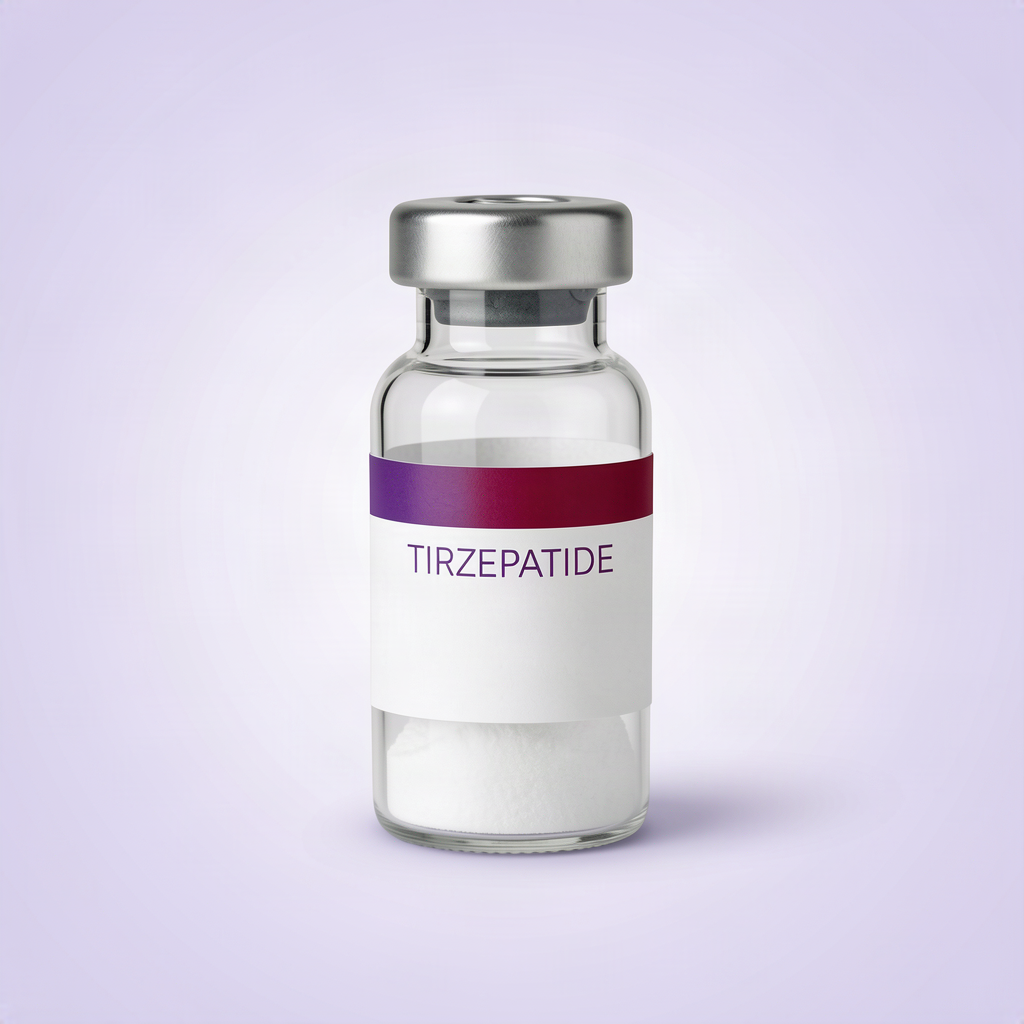
Real Cost Drivers in a Tirzepatide Batch
Understanding where the money goes makes it easier to spot a quotation that cannot be genuine.
| Peptide chain synthesis | 39 residues with targeted substitutions; the dominant cost component |
| Lipid conjugation | The C20 fatty diacid and linker chemistry that gives the molecule its extended behaviour |
| Purification | Reversed-phase HPLC to isolate the target from truncated and incomplete-deprotection byproducts |
| Analytical release testing | HPLC purity plus mass spectrometry identity confirmation per batch |
| Fill, seal and packaging | Device assembly where material is supplied as a sealed pre-filled pen unit |
| Cold-chain logistics | Temperature-controlled domestic dispatch and packaging |
Each line is a real cost that a genuine supplier carries. A quotation priced below the sum of the first three is not achievable, whatever the marketing text says.
Bulk Buying Arithmetic
Multi-unit purchasing changes the comparison in ways that are easy to model incorrectly.
The tempting move is to compare the largest available pack against the smallest available pack from a cheaper supplier. That comparison fails, because the two quotations are almost never describing the same amount of documented peptide. The correct approach is to hold format and documentation standard across both sides of the comparison, then vary only quantity.
Where a supplier offers tiered pricing across quantities, the per-unit rate at the top tier is the figure worth comparing against a competitor’s single-unit rate. Comparing a top tier against a bottom tier flatters whichever side you applied the larger quantity to.
There is also a storage argument against over-buying. Sealed units are stable under standard cold storage, but they are not free of shelf-life considerations, and material bought to capture a discount and then held for an extended period is not obviously cheaper than material bought when needed.
When “Cheaper” Costs More
Four patterns recur, and all four invert the apparent saving.
The undocumented batch. Material at a low price with no lot-specific certificate cannot enter a published protocol. Cost per usable result approaches the full purchase price.
The de-lipidated batch. A synthesis that loses the C20 fatty-acid modification produces a molecule that purifies cleanly at a different mass. It will not behave as the literature describes. The cost of discovering this mid-study far exceeds the saving.
The imported unit with a delay. Overseas dispatch means customs handling and temperature exposure on a peptide that is sensitive to both. Losses on arrival are a real cost, and they usually arrive after the money has left.
The bulk solid you cannot characterise. A cheaper solid is only cheaper if your laboratory has the analytical capacity to verify it. If it does not, the material sits unused.
What a Defensible Price Comparison Looks Like
A comparison you can put in front of a supervisor has four columns, not one: comparable quantity, documented purity with stated method, format, and dispatch origin. Everything else is noise.
Applied consistently, that method usually narrows the field to a small number of suppliers – and the apparent price spread between them tends to shrink substantially, because the cheapest options drop out at the documentation column rather than at the price column.
For the underlying chemistry and why the documentation standard matters as much as it does, see the Tirzepatide Research Guide.
Applying the Method
United Peptides supplies Tirzepatide 60mg as sealed pre-filled research pen units, HPLC-verified at 99% or better, with batch documentation and UK dispatch. That is the format side of the comparison handled before any preparation work is needed. Every batch released is backed by an independent laboratory report, and the full documents are published against their lot numbers in our Certificate of Analysis gallery.
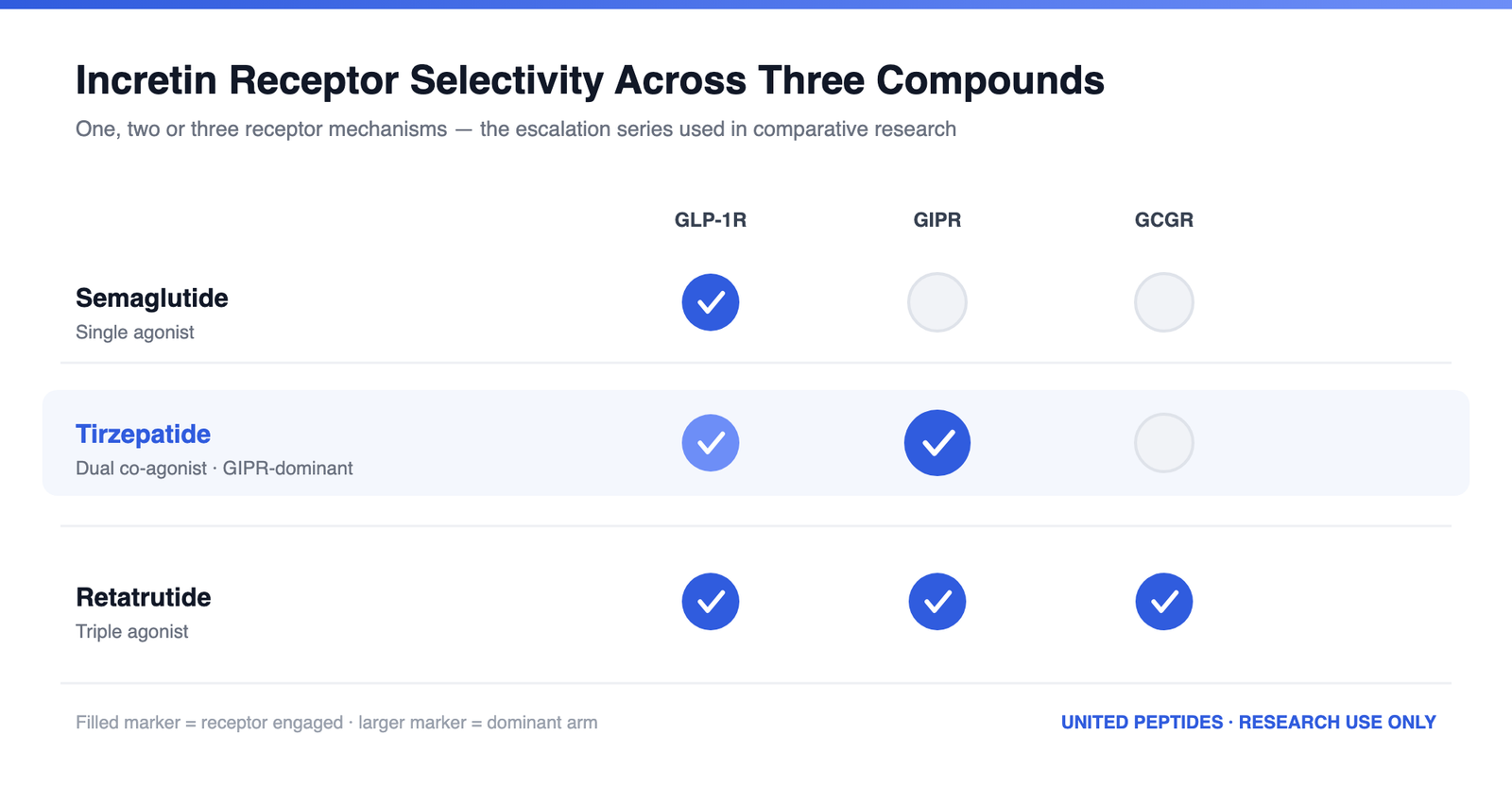
The single-receptor comparator for GIP/GLP-1 studies is Semaglutide 5mg. Where a design needs the triple-agonist arm, Retatrutide 40mg completes the escalation series.
Research Use Only
All products referenced in this article are supplied strictly for laboratory research use only (RUO). They are not medicines, not supplements, and not for human or veterinary use. They must not be administered to humans or animals, and they are not intended for diagnostic or therapeutic purposes. Purchasers must be 18 or older, UK-based, and buying for legitimate scientific research.
United Peptides supplies HPLC-verified, batch-documented research material. Browse the full range under research peptides.
Ready to compare documentation before you order?
Every batch we release ships with a lot-specific certificate of analysis you can verify directly with the issuing laboratory.
Frequently Asked Questions
Why do Tirzepatide prices vary so much between UK suppliers?
Most variation reflects what is being quoted rather than a genuine market spread. Differences in quantity basis, purity method, documentation completeness, format and dispatch origin account for the gap. Normalising all five usually brings quotations much closer together.
Is the cheapest Tirzepatide good enough for research?
Only if it satisfies the same documentation standard as a higher-priced unit – a lot-specific certificate of analysis with HPLC purity as peptide content and mass spectrometry identity confirmation. Price alone tells you nothing about whether material is usable in published work.
Is Tirzepatide approved for human use?
Tirzepatide has been approved as a therapeutic in some jurisdictions for specific clinical indications, but material supplied by United Peptides is sold strictly for laboratory research use only, is not a medicine, and is not intended for human or veterinary use or for diagnostic or therapeutic purposes.
Should I buy in bulk to get a better per-unit price?
Only after holding format and documentation standard across both sides of the comparison. Bulk discounts are real, but material bought to capture a discount and then held in storage for an extended period is not automatically cheaper than buying when needed.
Does buying a bulk solid instead of a pen save money?
Not necessarily. A bulk lyophilised solid adds weighing, solvent work and in-house characterisation before any experiment can run. Unless your laboratory already carries that analytical capacity, sealed pre-filled units are frequently the lower true cost.